
Course Curriculum
A structured learning path designed to help you understand parrot behavior from the basics to real-world application.
This curriculum is carefully designed to guide you step by step through parrot psychology, communication, training, and ethical care. Each module builds on the previous one, allowing you to apply what you learn gradually and confidently.
Course Modules
Course Modules
This lesson explains how proper nutrition directly affects behavior, learning ability, and emotional stability. You’ll learn how diet influences motivation, focus, and overall training success, and how to avoid common feeding mistakes that slow progress.
Learn how to identify the real reasons behind a parrot’s lack of response. This lesson explores stress, fear, confusion, reinforcement timing, and environmental factors that often block learning, helping you adjust your approach effectively.
Discover how different parrot species think, react, and adapt to new environments. This lesson helps you set realistic expectations and prepare mentally before training begins, reducing stress for both you and your bird.
Learn how to properly support your parrot during the critical adjustment phase. This lesson covers early routines, feeding strategies, trust-building, and how to introduce positive reinforcement without overwhelming the bird.
This lesson connects scientific principles with real-life training situations. You’ll learn how to move from understanding concepts to applying them step by step, ensuring your parrot learns through clarity, consistency, and patience.
Understand how your posture, movement, and energy affect your parrot’s responses. This lesson teaches how to build confidence in both trainer and bird using gradual exposure and clear communication.
Learn how to create an environment that stimulates your parrot mentally and physically. This lesson explains enrichment tools, rotation strategies, and safety considerations that prevent boredom-related behavioral problems.
This lesson focuses on identifying fear-based behaviors and responding constructively. You’ll learn how to reduce aggression without punishment by changing triggers, environment, and reinforcement strategies.
A deeper continuation of the previous lesson, this module provides practical frameworks and real-life examples. Learn how consistency and timing play a critical role in reshaping emotional responses.
Food bowls and cages are common triggers for aggression. This lesson teaches how to manage territorial behavior safely while maintaining trust and respect, without escalating fear or conflict.
Learn the technical foundations of effective training. This lesson covers markers, reinforcement timing, shaping behavior, and desensitization techniques that create clear and stress-free communication.
Building on previous lessons, this module focuses on consistent strategies for managing resource-related aggression while protecting the bird’s sense of safety and autonomy.
This course teaches how to train a parrot to talk. It covers common myths about talking parrots, which species are most suitable for learning speech, and the most effective ways to expose parrots to sounds you want repeated. The course also explains proven methods to encourage vocalization and, most importantly, how to train a parrot to talk on cue.
Explore the scientific principles, risks, and ethical considerations behind free flight. This lesson helps you understand when free flight is appropriate and how welfare must always come before ambition.
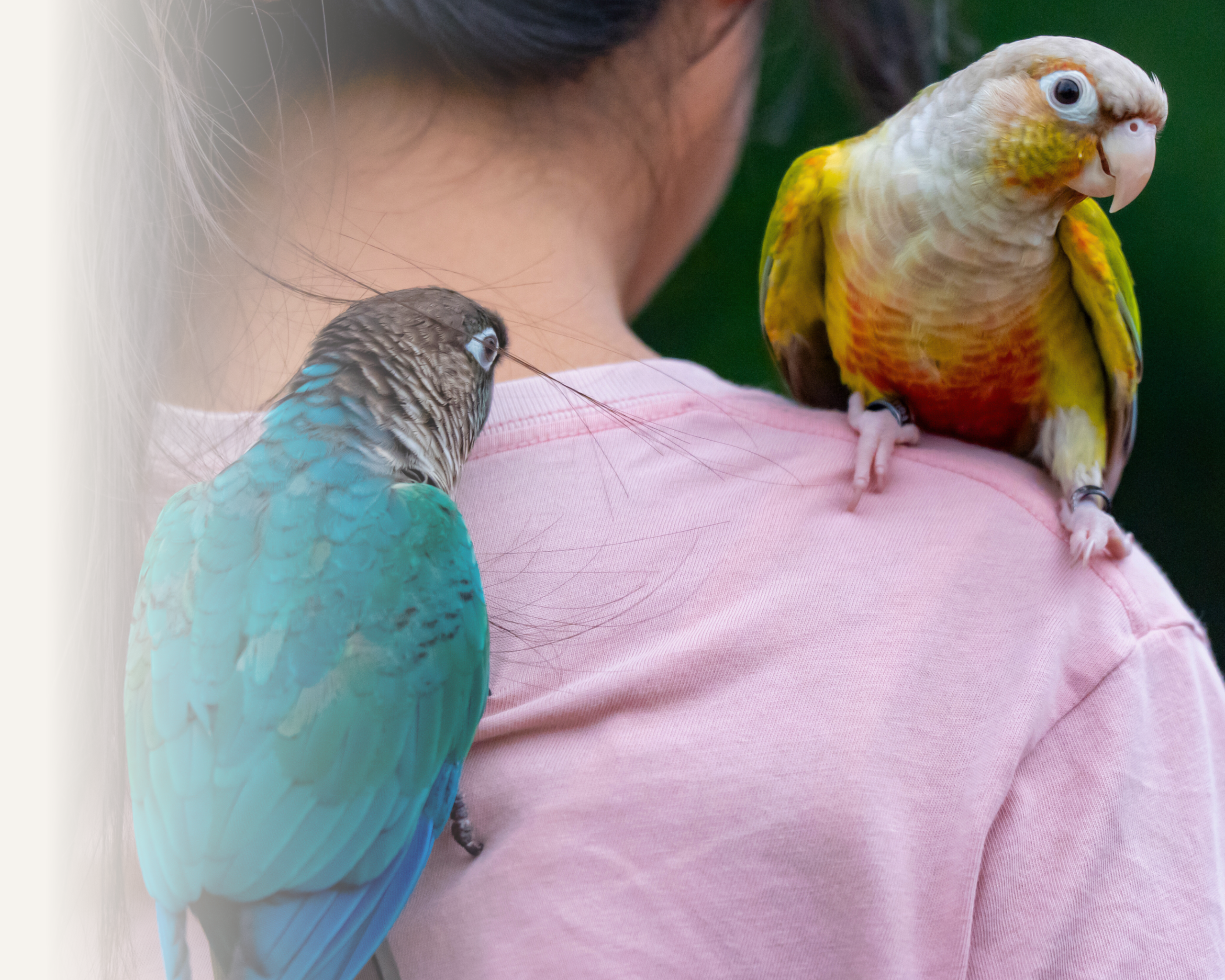
A focused lesson on conure-specific behavior and training needs. Learn how to create long-term, sustainable habits using species-appropriate methods grounded in science and real-world experience.
Additional Learning Resources
Additional Learning Resources
- Bluefronted Amazon Taming & Training from Tatweer service
- Downloadable E-Books
- Reference materials for deeper understanding
- Access to the student community for discussion
- Nail trimming tutorials
- Trick tutorials
Start Understanding Your Parrot Today!
Get full access to the course and community, and start building a calmer relationship with your parrot today.